
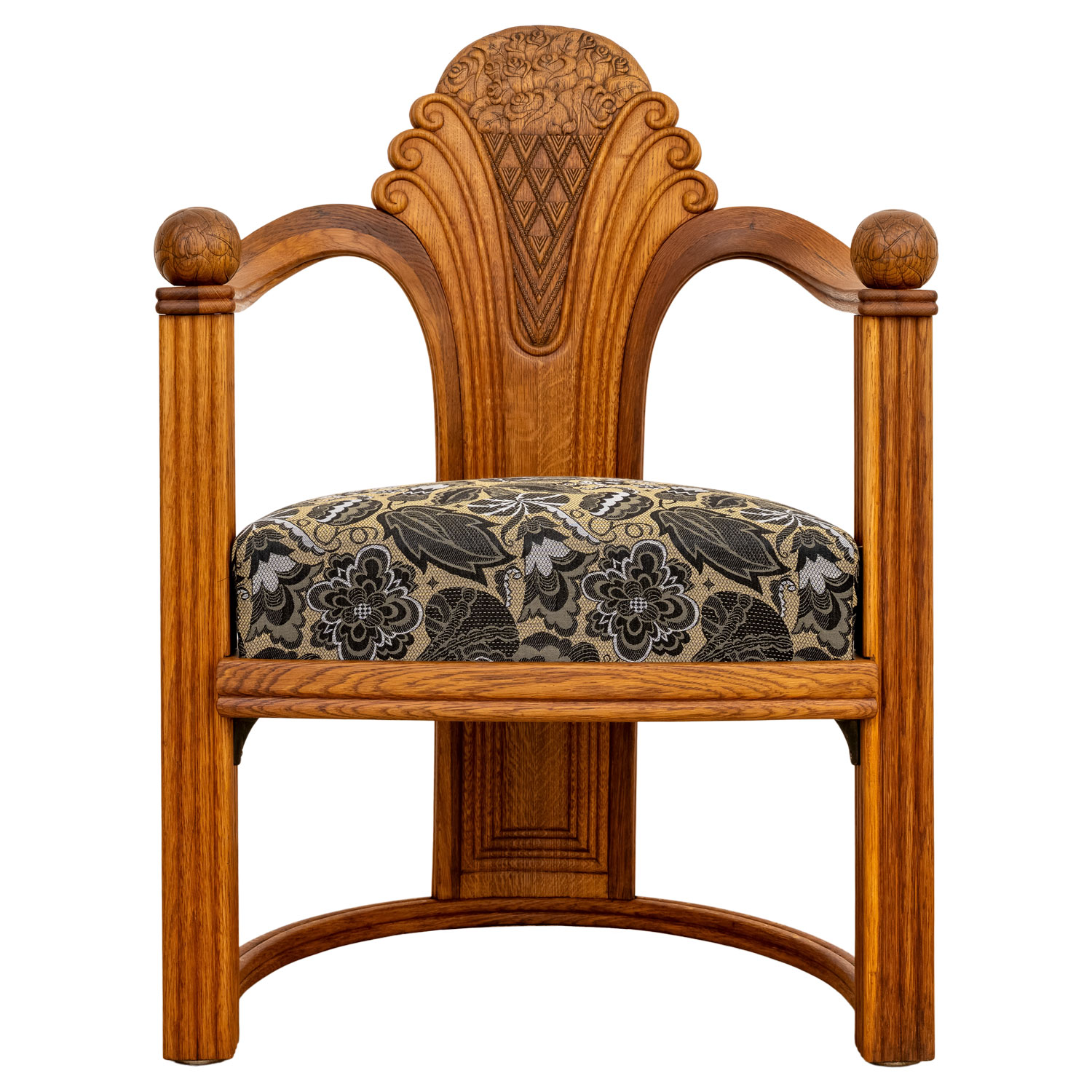
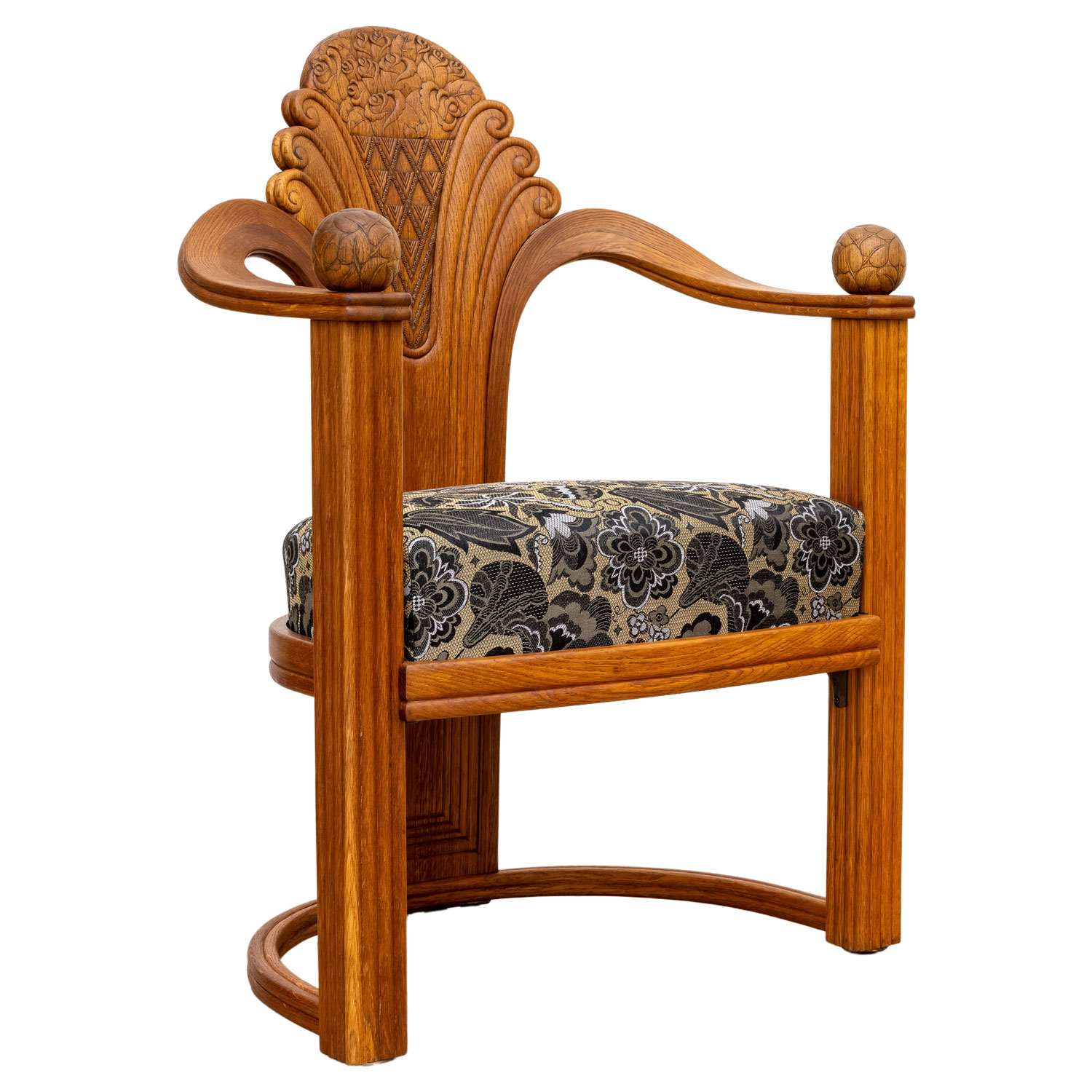
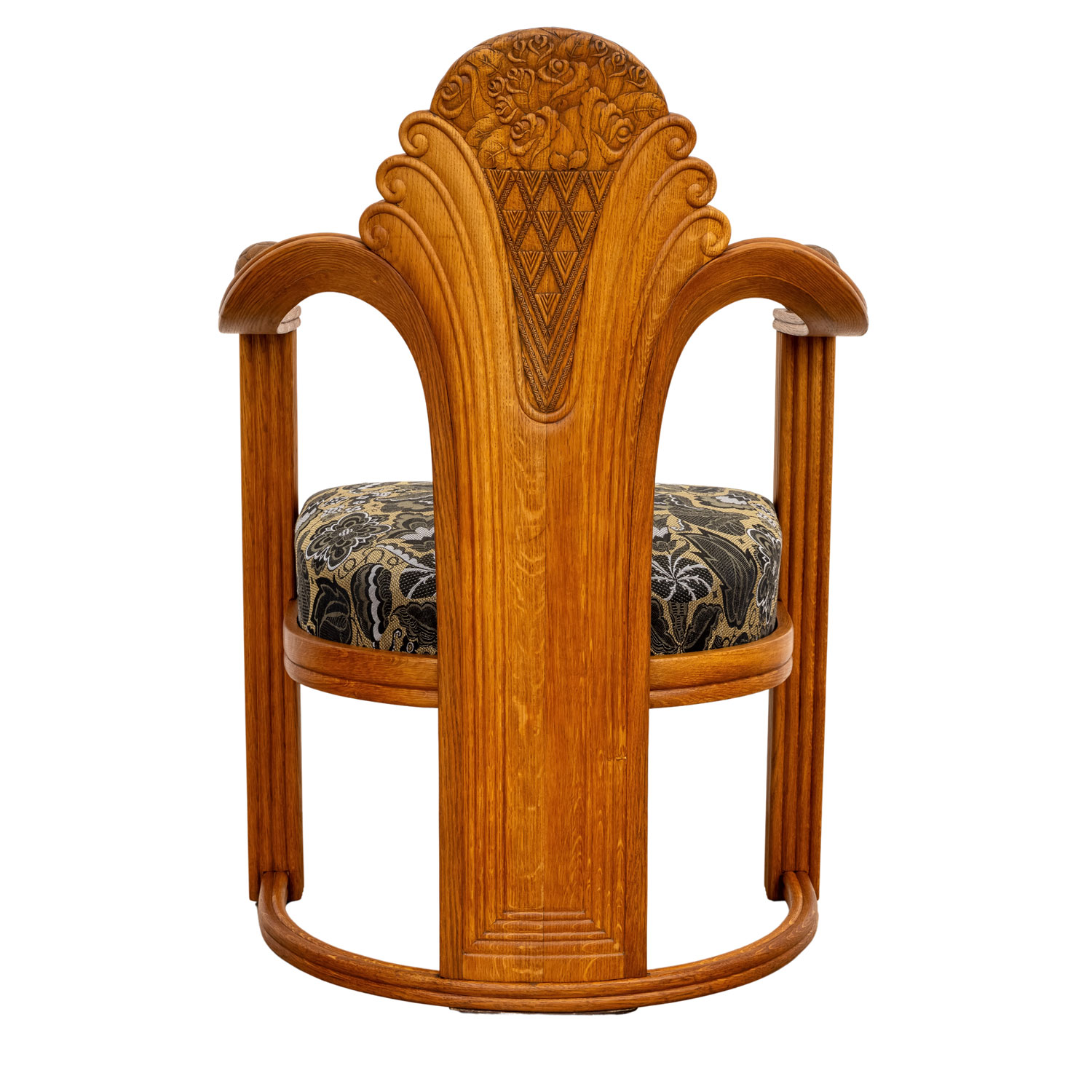
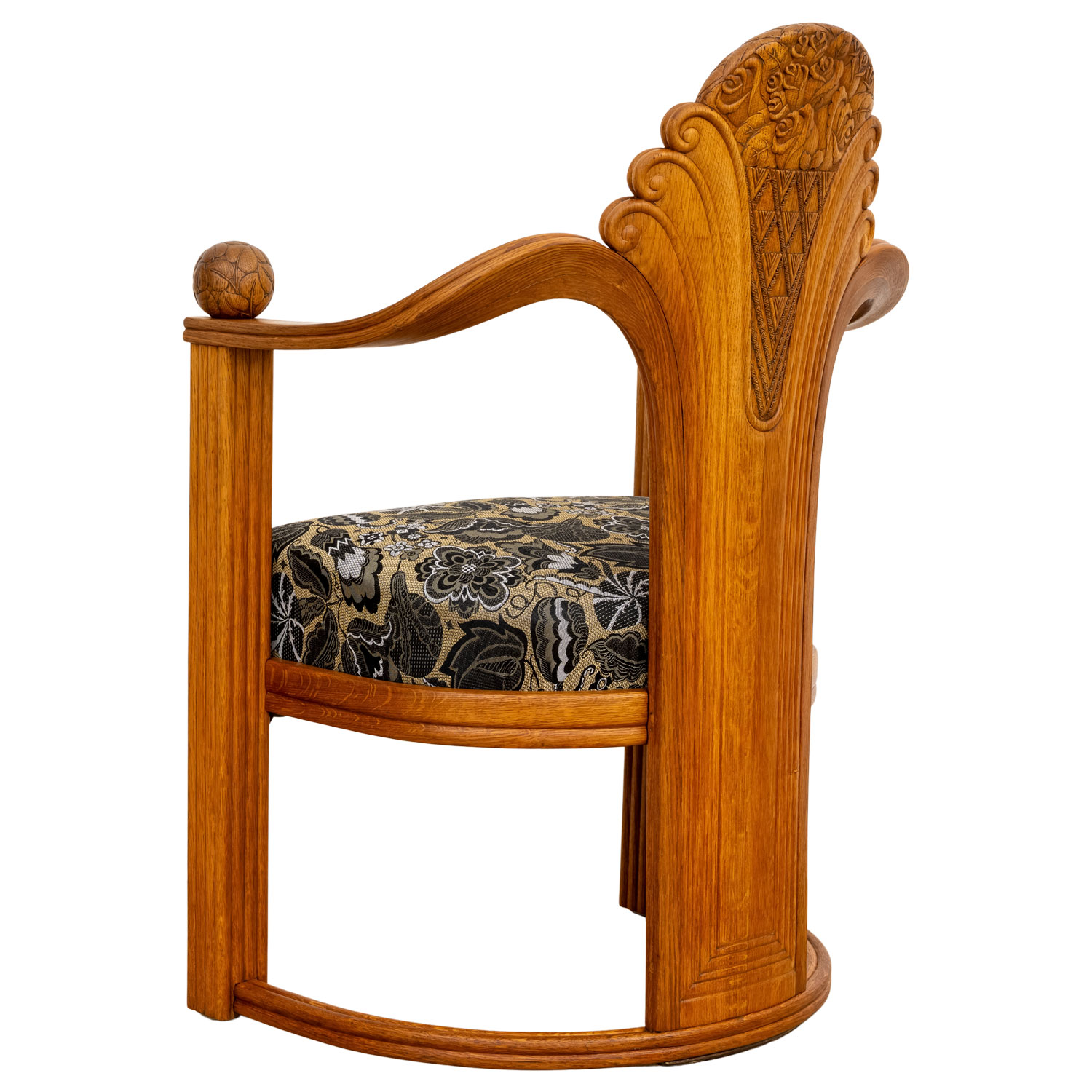

Armchairs Otto Prutscher Gebrüder Thonet Wien ca. 1913/14

SKU 1677 Tags , , ,

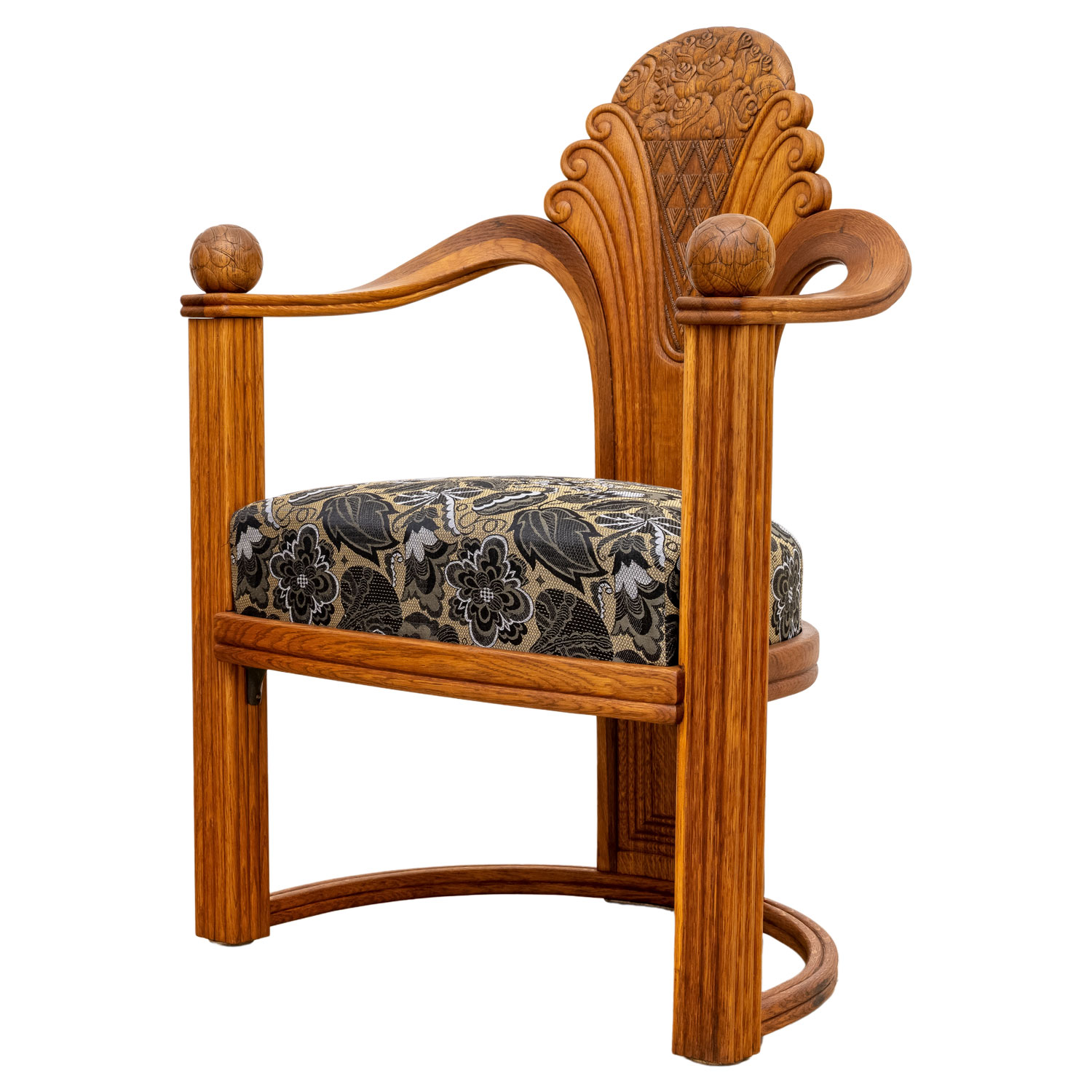
Four armchairs, model exhibited at the Werkbund Exhibition in Cologne in 1914, design by Otto Prutscher, execution by Gebrüder Thonet, Wien, ca. 1913/14, carved oak, bent beech wood

  • Height: 94cm, Width: 67cm, Depth: 45cm
  • 1913 to 1914
    Technique: carved oak, bent; renewed upholstery
    two models exhibited at the Deutscher Werkbund Exhibition, Cologne, 1914; one model exhibited at the Venice Biennale, 1976. Two examples of the model are held in the MAK (Museum of Applied Arts), Vienna, inv. nos. H 2302-2 and H 2302-1 bib.: illustrated in: Berta Zuckerkandl, “Das Österreichische Haus auf der Deutschen Werkbund-Ausstellung – Cöln,” in: Deutsche Kunst und Dekoration. Illustrirte Monatshefte für moderne Malerei, Plastik, Architektur, Wohnungskunst und künstlerische Frauen-Arbeiten, vol. XXXIV, April–September 1914, p. 368; illustrated in: Eugen Kalkschmidt, “Das Österreichische Haus der Werkbund-Ausstellung,” in: Moderne Bauformen. Monatshefte für Architektur und Raumkunst, 13th year, January–June 1914, p. 399; illustrated in: Christoph Thun-Hohenstein, Rainald Franz (eds.), Otto Prutscher. Allgestalter der Wiener Moderne. Exhibition catalog, MAK – Museum für angewandte Kunst, Vienna, Stuttgart 2019, p. 155; Giovanni Renzi, Il mobile moderno, Milan 2008, p. 180–181; Max Eisler, Österreichische Werkkultur, Vienna 1916, p. 61 and 111; Alexander von Vegesack, Das Thonet Buch, Munich 1987, p. 144–145; decorative fabric “Blumenmuster in schwarz/weiß auf gold”, design by Dagobert Peche, execution by Philipp Haas & Söhne, Wien, MAK, Viena, inv.-no. WI 1307;
    Price on request
    Price on request
    SKU 1677 Tags , , ,
    Description

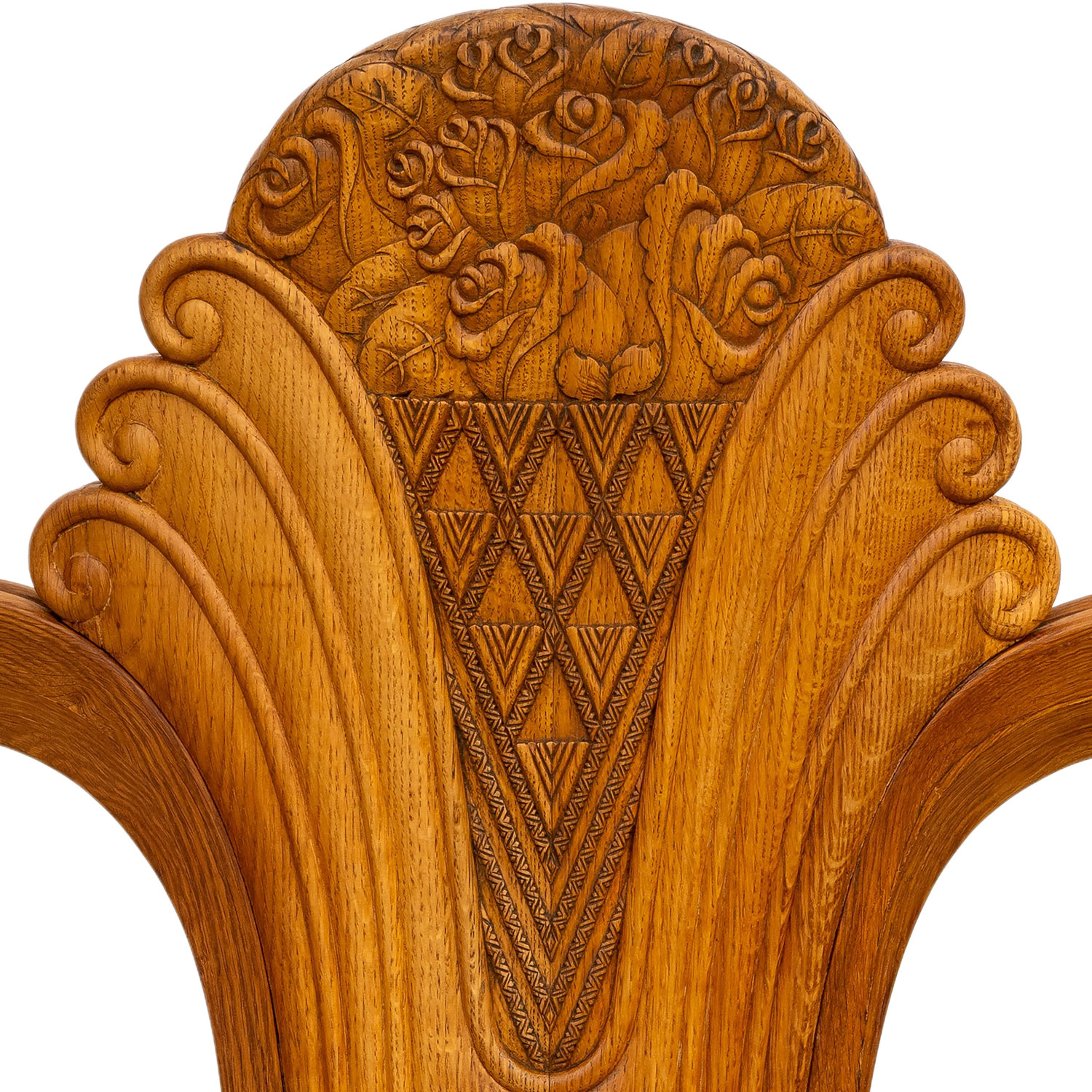
    Otto Prutscher designed one of his most impressive pieces of furniture for the 1914 Werkbund Exhibition in Cologne. The throne-like fauteuils are at once opulent in their ornamentation and remarkable for their sense of lightness. The backrest rises from the floor as a relief-carved geometric ornament, unfolding above the seat into volute-like tendrils and crowned at the center by a richly carved rose motif. The armrests flow seamlessly from the backrest, curving elegantly towards the front legs, where they terminate in finely carved balls with foliage. The two legs are square in section and fluted on all sides. At floor level, they are connected to the backrest by a semicircular arch, visually completing the construction.
    To demonstrate its expertise as a furniture manufacturer, Thonet commissioned renowned architects of the period to create exclusive interior furnishings for major exhibitions, thereby positioning the company at the forefront of contemporary design. The designers were generally given considerable freedom regarding the complexity and quality of execution. The 1914 Werkbund Exhibition in Cologne ranks among the most important presentations of European modernism, bringing together leading architects, designers and artists from Germany and Austria. As a major showcase of the Deutscher Werkbund, it demonstrated the synthesis of architecture, art and the applied arts with industrial production. The ensemble designed by Otto Prutscher exemplifies this synthesis and ranks among the most exceptional furniture designs of its time.
    Josef Hoffmann played a central role in the strong presence of Viennese Modernism at the 1914 Werkbund Exhibition in Cologne. As a leading architect, co-founder of the Wiener Werkstätte and teacher of Otto Prutscher, he was instrumental in the selection and organization of the Austrian contributions. With his involvement, a cohesive group of Viennese architects and representatives of the Wiener Werkstätte was presented in Cologne, including Dagobert Peche, Josef Frank and E. J. Wimmer-Wisgrill. For Prutscher, who had studied under Hoffmann at the Vienna School of Arts and Crafts, the exhibition provided an international forum within the Viennese tradition of the Gesamtkunstwerk, Raumkunst and the applied arts, traditions that would decisively shape his later work.
    For the Cologne exhibition, the ensemble was executed in black-stained oak. The sumptuous execution of these Thonet seating pieces long led to the assumption that they constituted a pair of chairs made specifically for the exhibition. The armchairs were not included in Thonet’s commercial range, although Otto Prutscher later used eight examples in a villa in Brno that he designed and furnished.
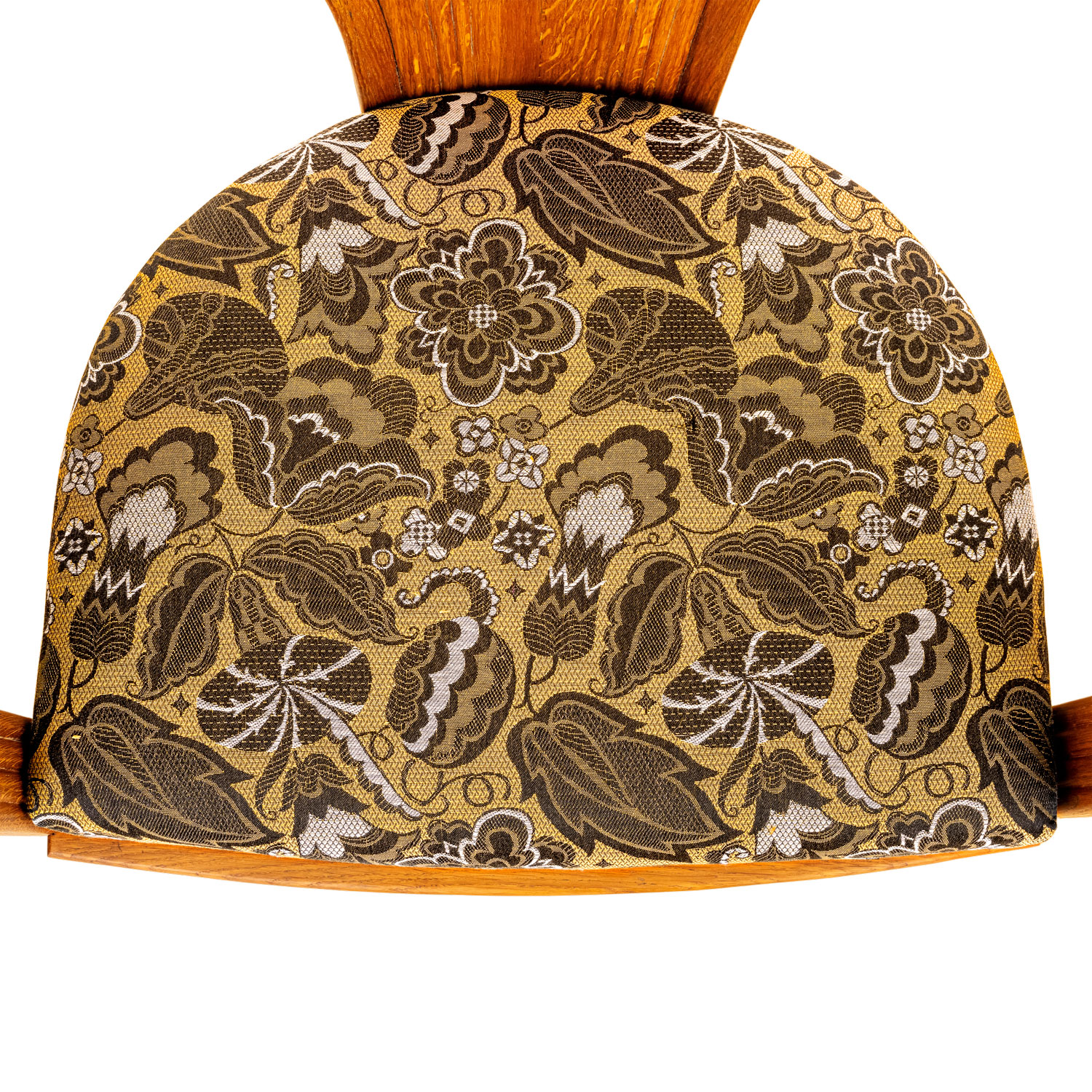
    The present armchairs have been reupholstered in a specially reproduced decorative fabric, the design of which dates to around 1913 and is attributed to Dagobert Peche; at the time, it was produced by Philipp Haas & Söhne. As historical photographs of the Werkbund Exhibition show, the chairs presented there were likewise upholstered in this fabric. The largely forgotten design was reconstructed specifically for the restoration of the armchairs and recreated by Backhausen in a faithful reproduction of the original weave.

    Inquiry

    By submitting the inquiry form, you agree to the use of your data for this inquiry. Privacy Policy

    Four armchairs (model exhibited at the Werkbund Exhibition in Cologne 1914) Otto Prutscher Gebrüder Thonet Wien ca. 1913/14 oak bent beech wood
    Armchairs Otto Prutscher Gebrüder Thonet Wien ca. 1913/14
    You might be interested in

    Thank you for subscribing to our newsletter

    Social Media

    Thank you for subscribing to our newsletter

    Social Media

    Thank you for your inquiry!

    We will process your request as quickly as possible.

    Current time in Vienna:
    Monday, 17:56
    Office hours

    Monday to Friday: 10:00 a.m. – 6:00 p.m.
    Saturday: 10:00 a.m. – 4:00 p.m.

    Visit our exhibitions too

    Social Media

    Always up to date with our art trade newsletter

    Our next exhibitions

    Social Media