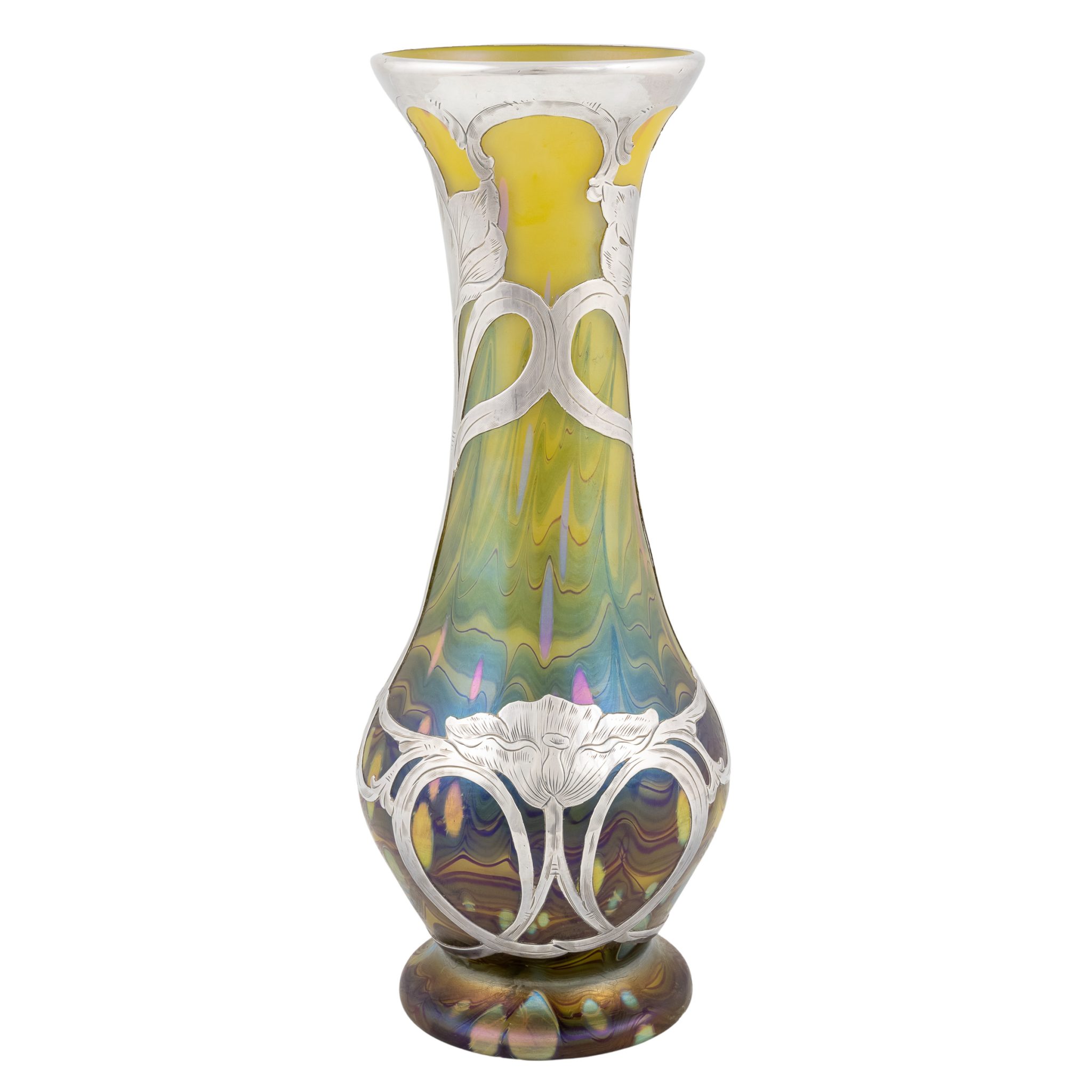
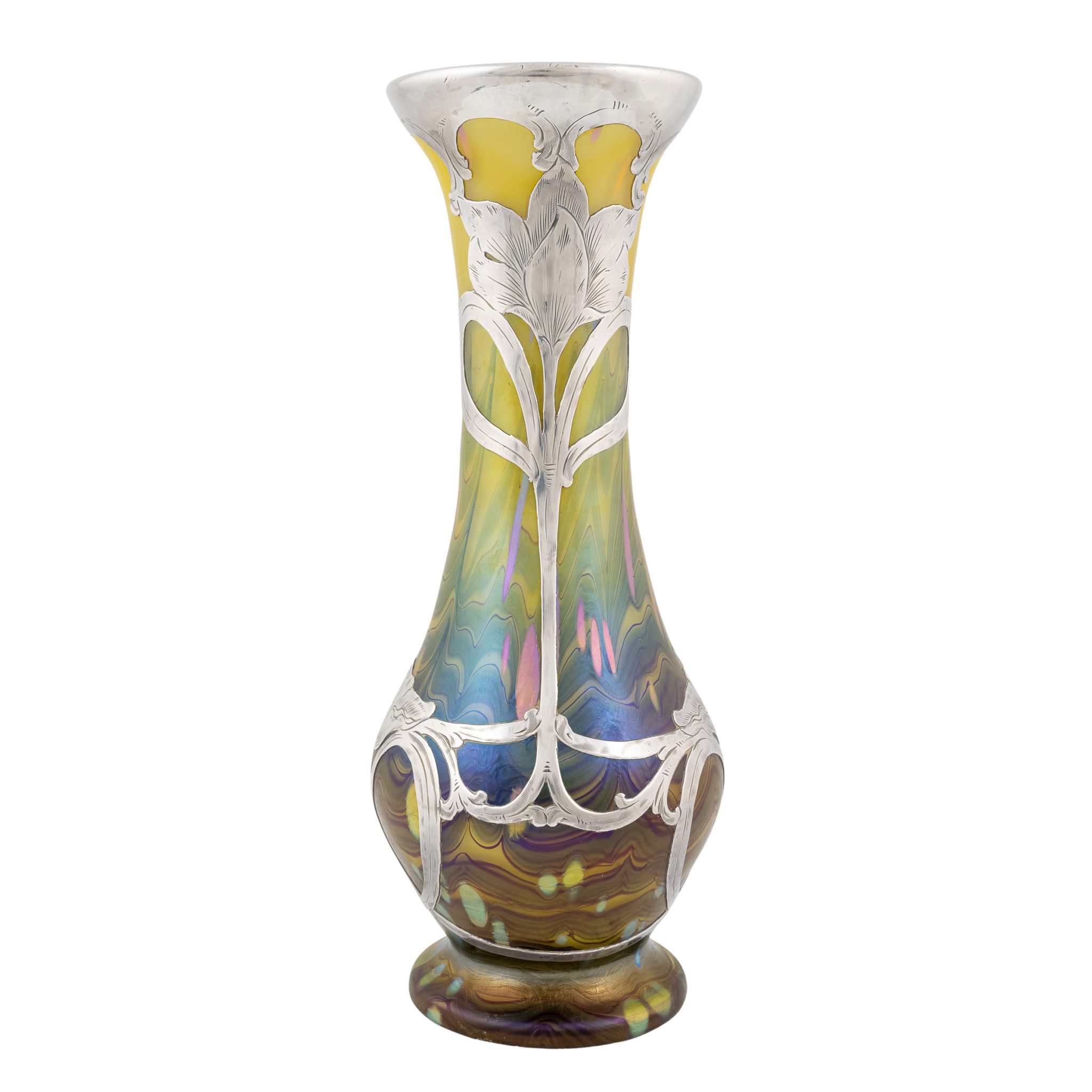
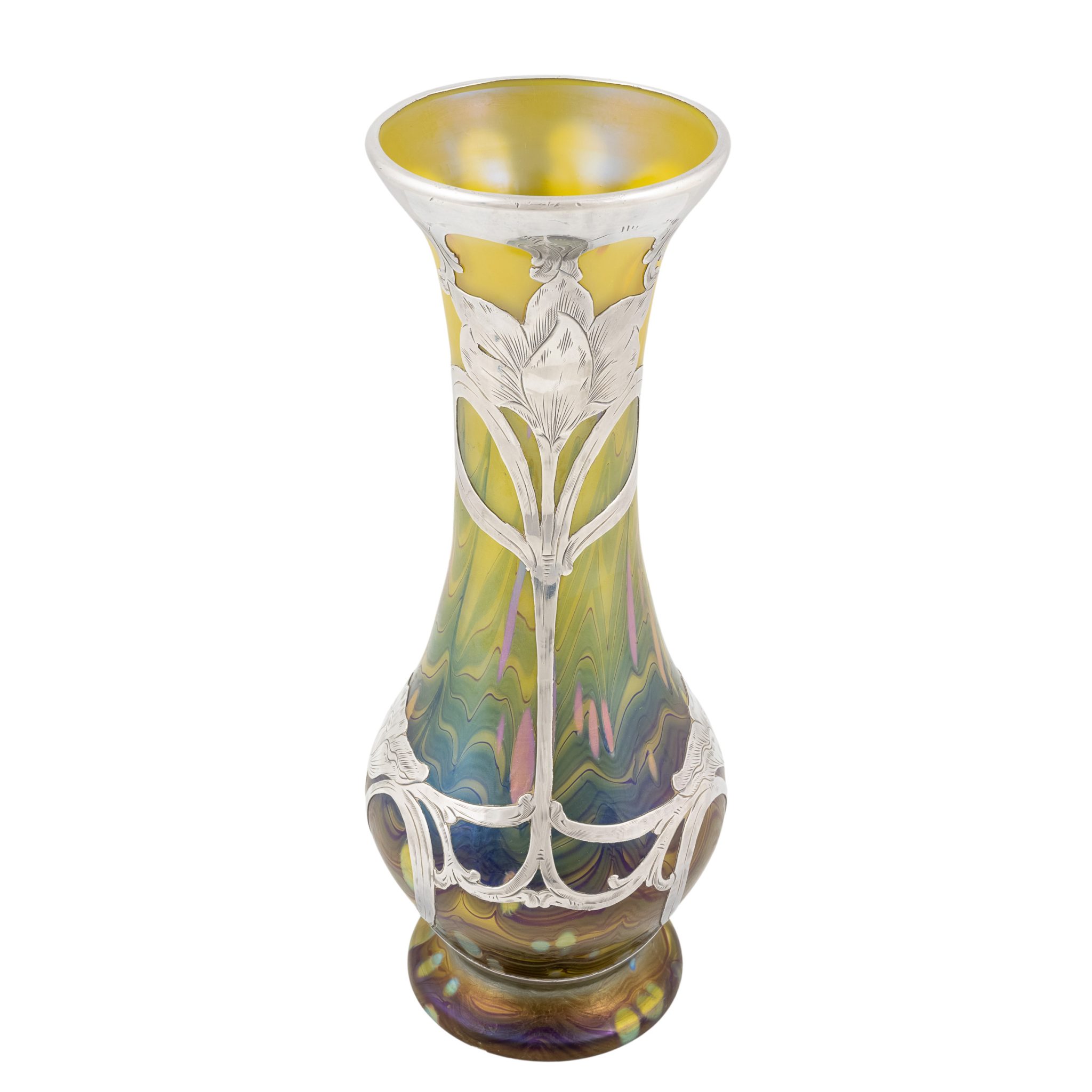
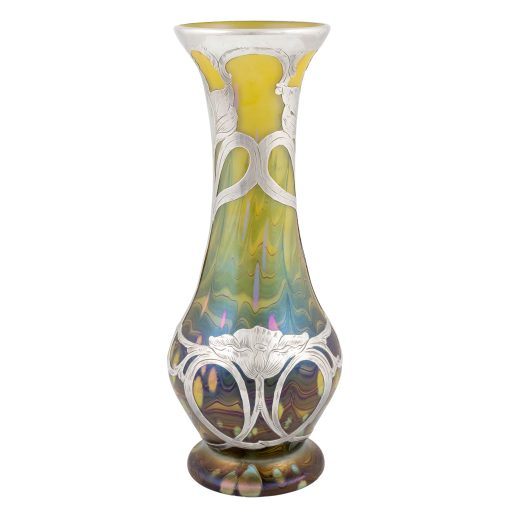
This vase unites three defining design elements of Art Nouveau around 1900 and powerfully reflects the artistic signature of the renowned glassworks Johann Loetz Witwe.
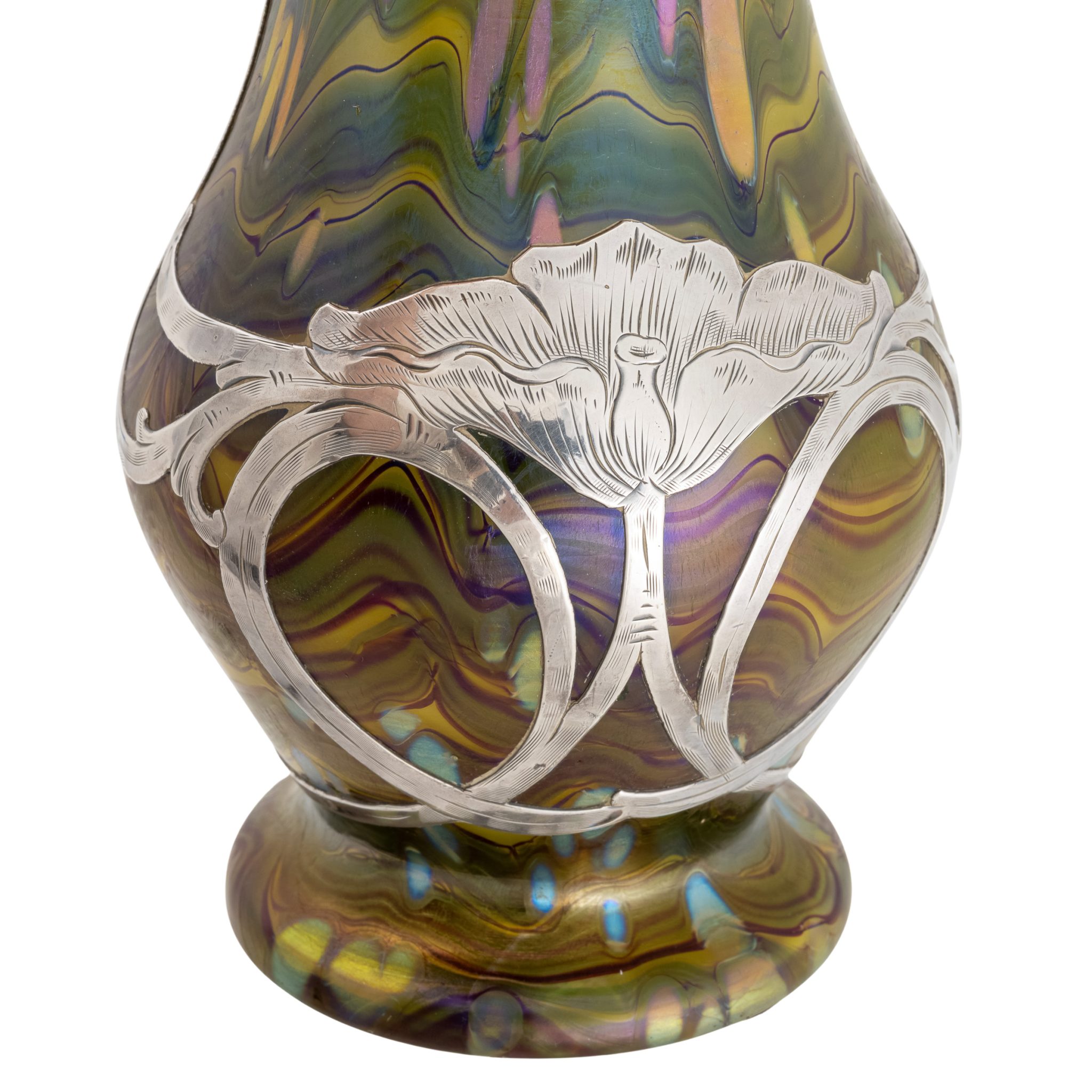
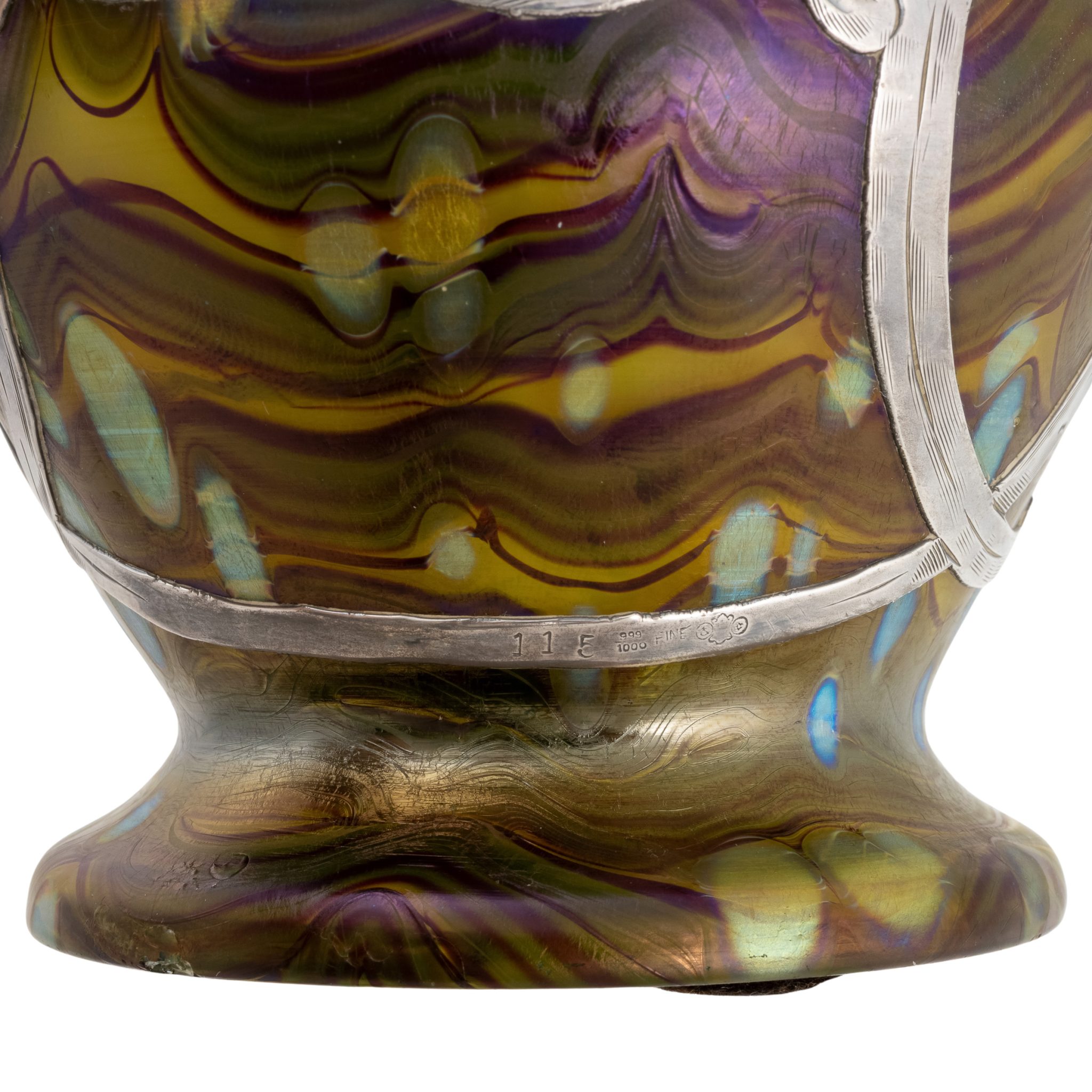
First, it captivates with its vibrant “Cytisus” decor—also known as Golden Rain—one of the most expressive and sophisticated surface designs developed by Loetz. Like many of the manufactory’s celebrated decors, Cytisus was inspired by the secessionist aesthetics of Vienna’s Fin de Siècle. Its luminous color palette and delicate gold accents echo the visual language of contemporary Viennese painting and architecture.
Second, the vase is adorned with an intricately executed silver overlay: loosely entwined tendrils and stylized blossoms organically embrace the curving form of the vessel—hallmark motifs of Art Nouveau. This technique, in which pure silver is applied to the glass surface and then partially cut away to create openwork, relief-like patterns, was first patented in 1886 by the American firm Alvin.
Particular attention is drawn to the stylized depiction of the iris, a flower that held special significance in the Art Nouveau period. The iris, celebrated as a symbol of feminine beauty and grace, frequently appeared in the graphic works of Alphonse Mucha as well as in the glass designs of Koloman Moser. Its elegant silhouette and symbolic resonance made it a central motif of the era—and here too, it reveals ist full poetic impact.