
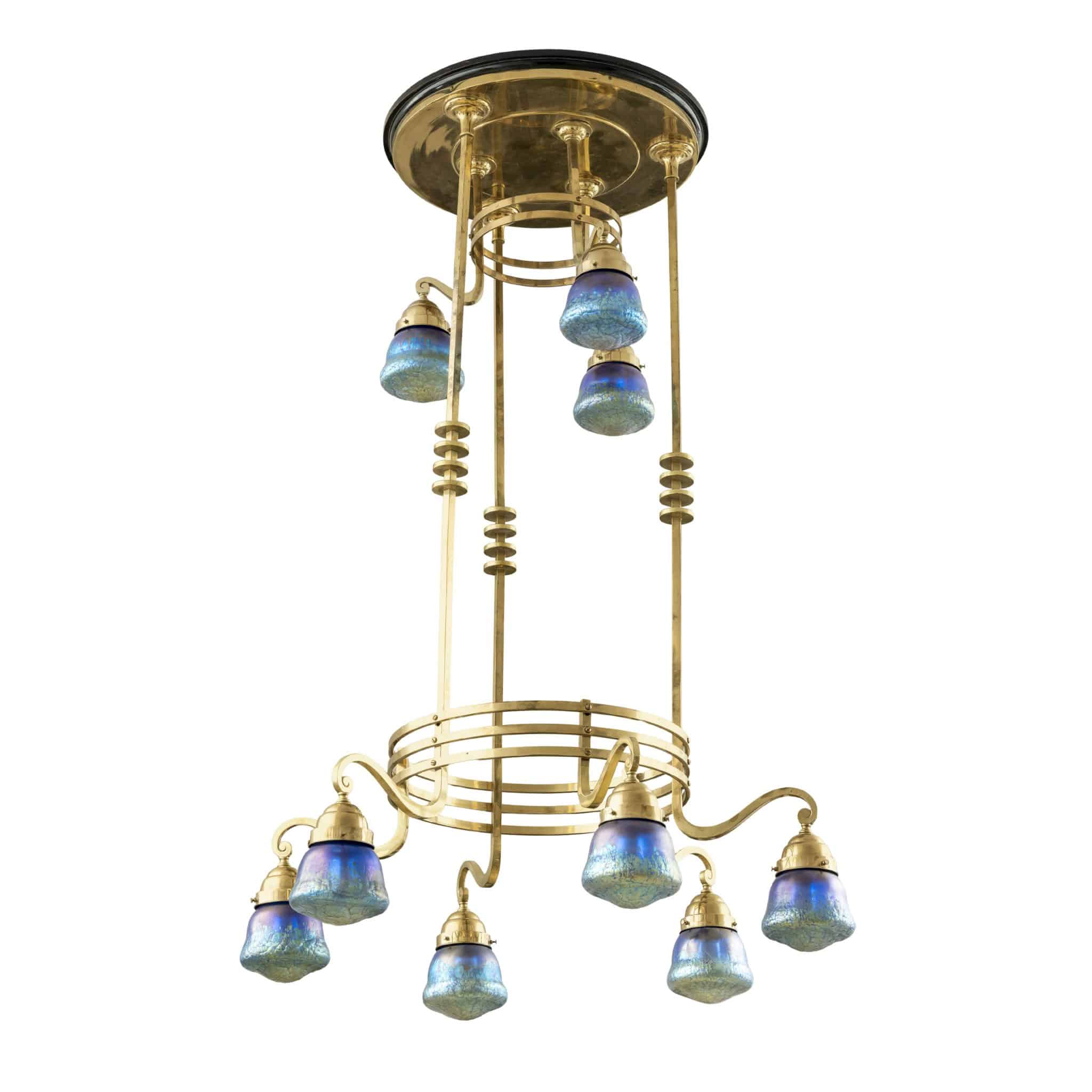
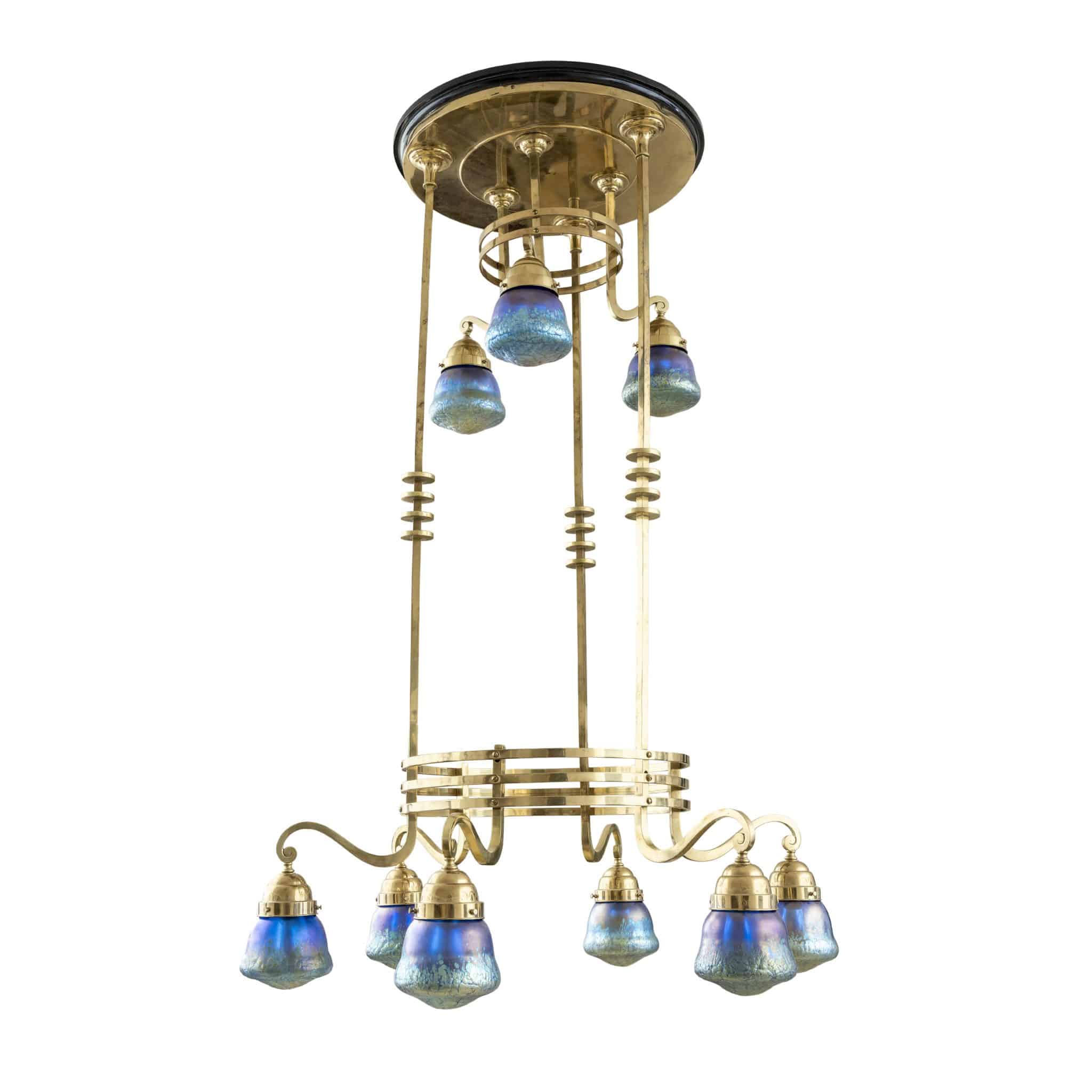
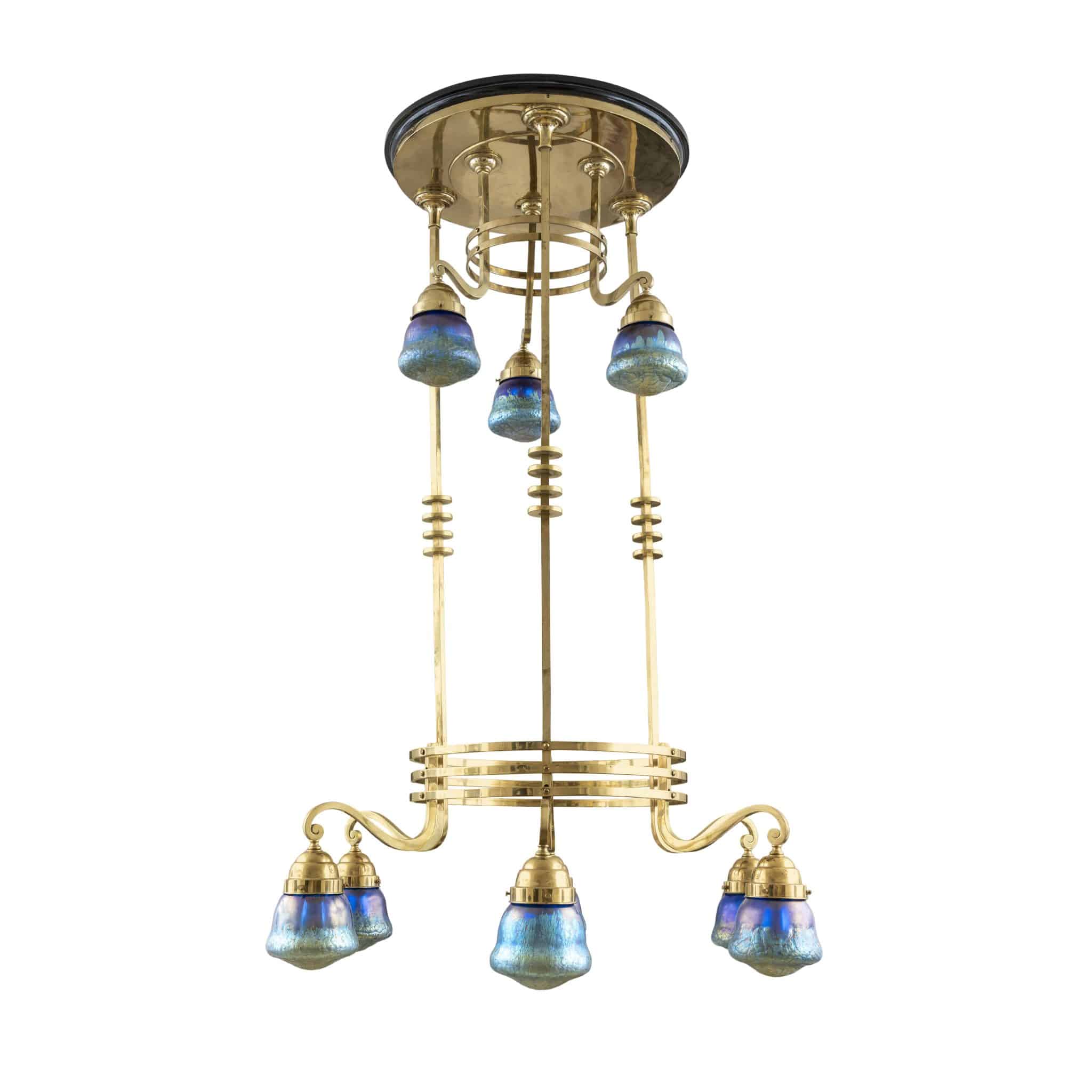
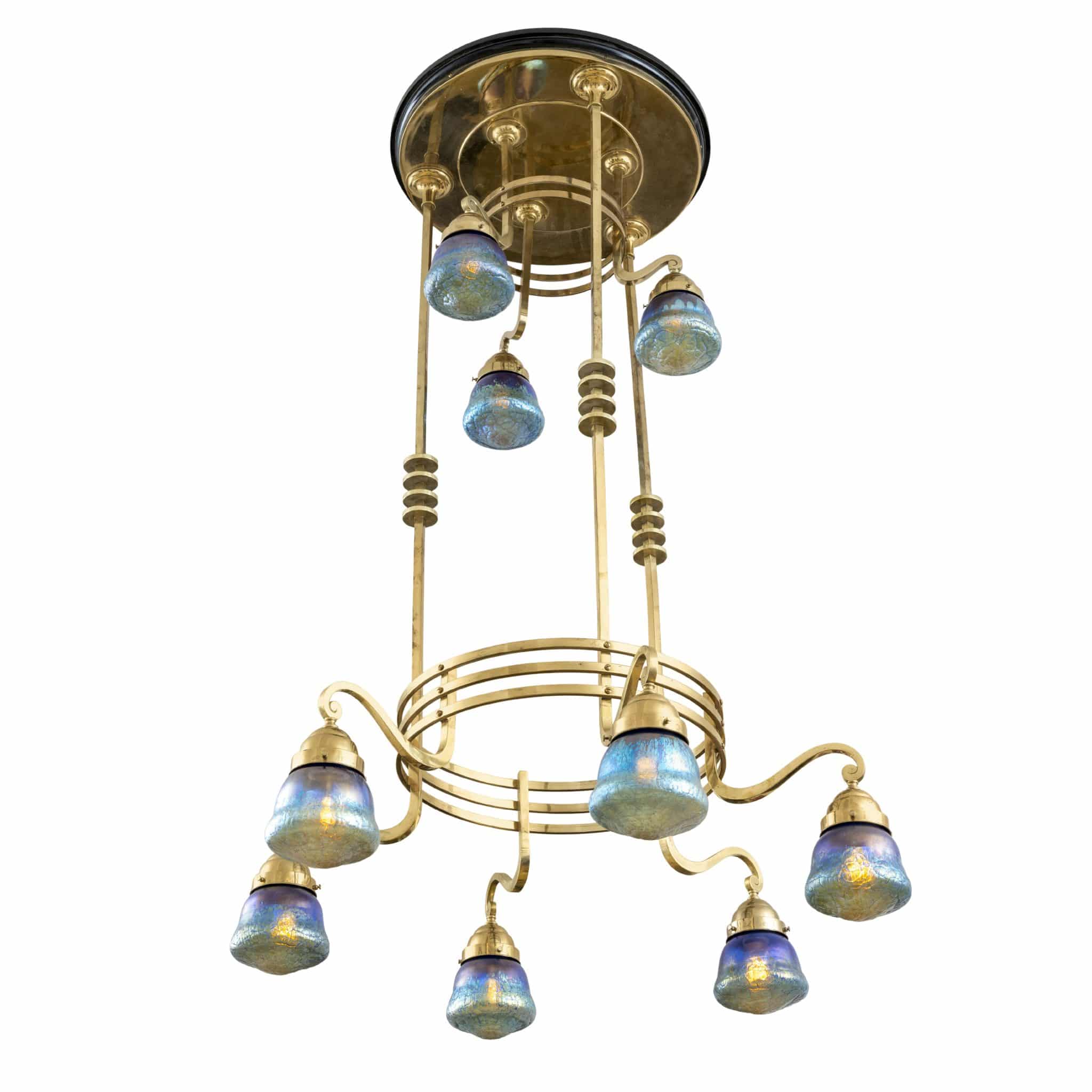
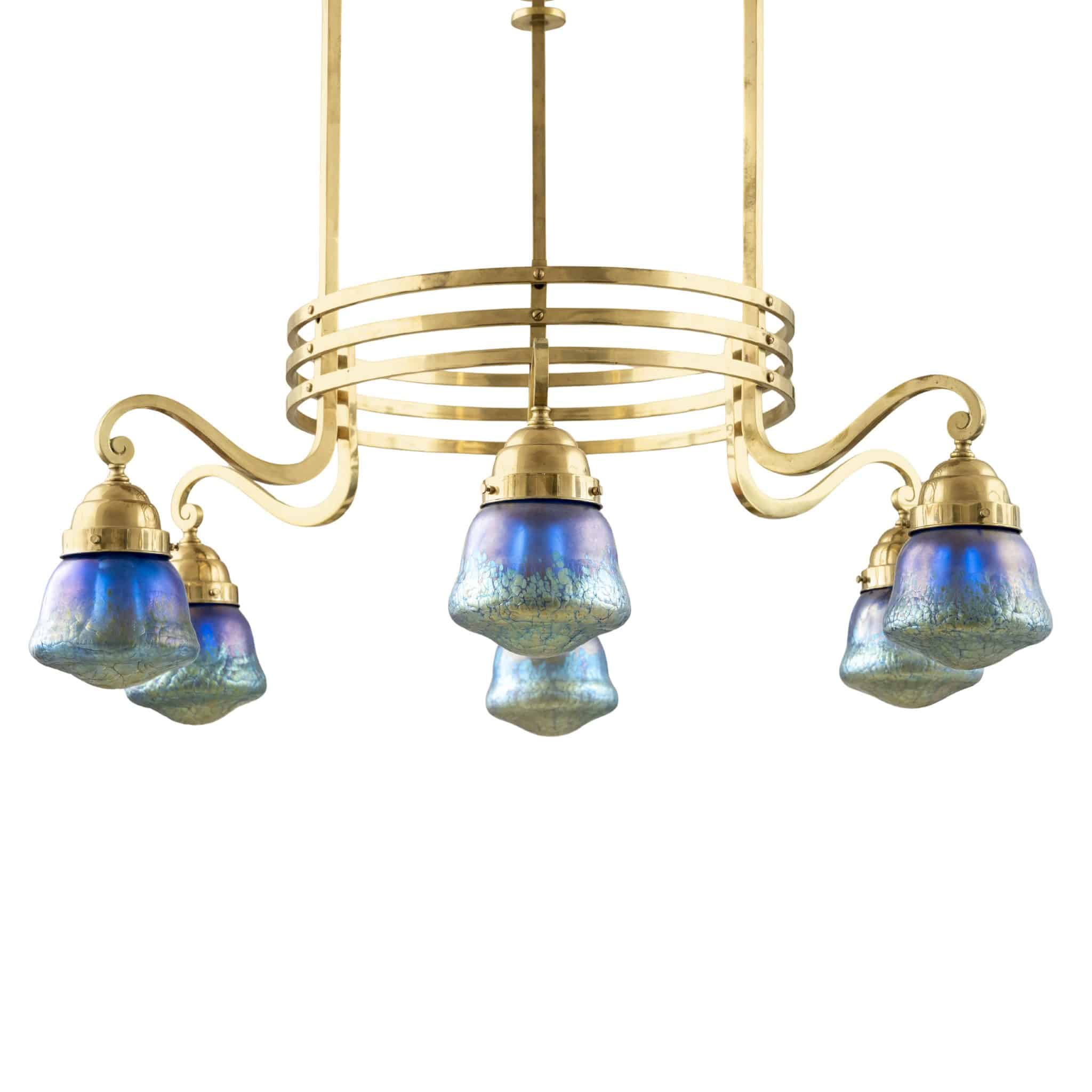
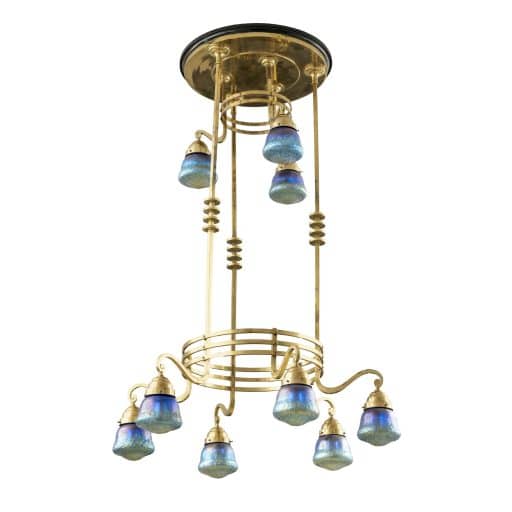
Chandelier with Loetz shades Koloman Moser PG 377 ca. 1901

SKU 1566 , Tags ,

Chandelier with Loetz-shades, design by Koloman Moser (form of the shades), execution Johann Loetz Witwe for E. Bakalowits Wien, decor Phenomen Genre 377 dunkelblau, um 1901, brass, glass, iridescent

  • Height: 86cm, Width: 131cm, Depth: 86cm
  • 1900 to 1904
    Technique: brass, polished; glass, mold-blown and freeform, reduced and matte iridescent
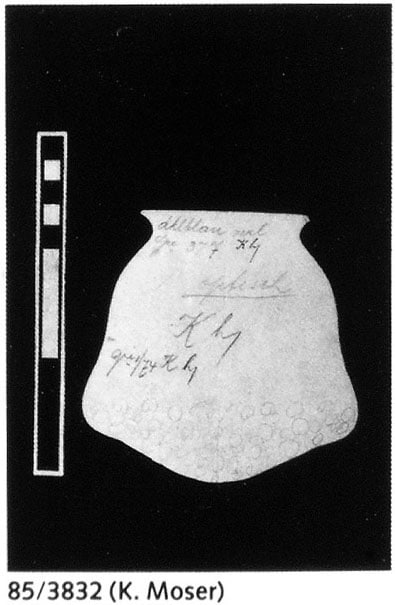
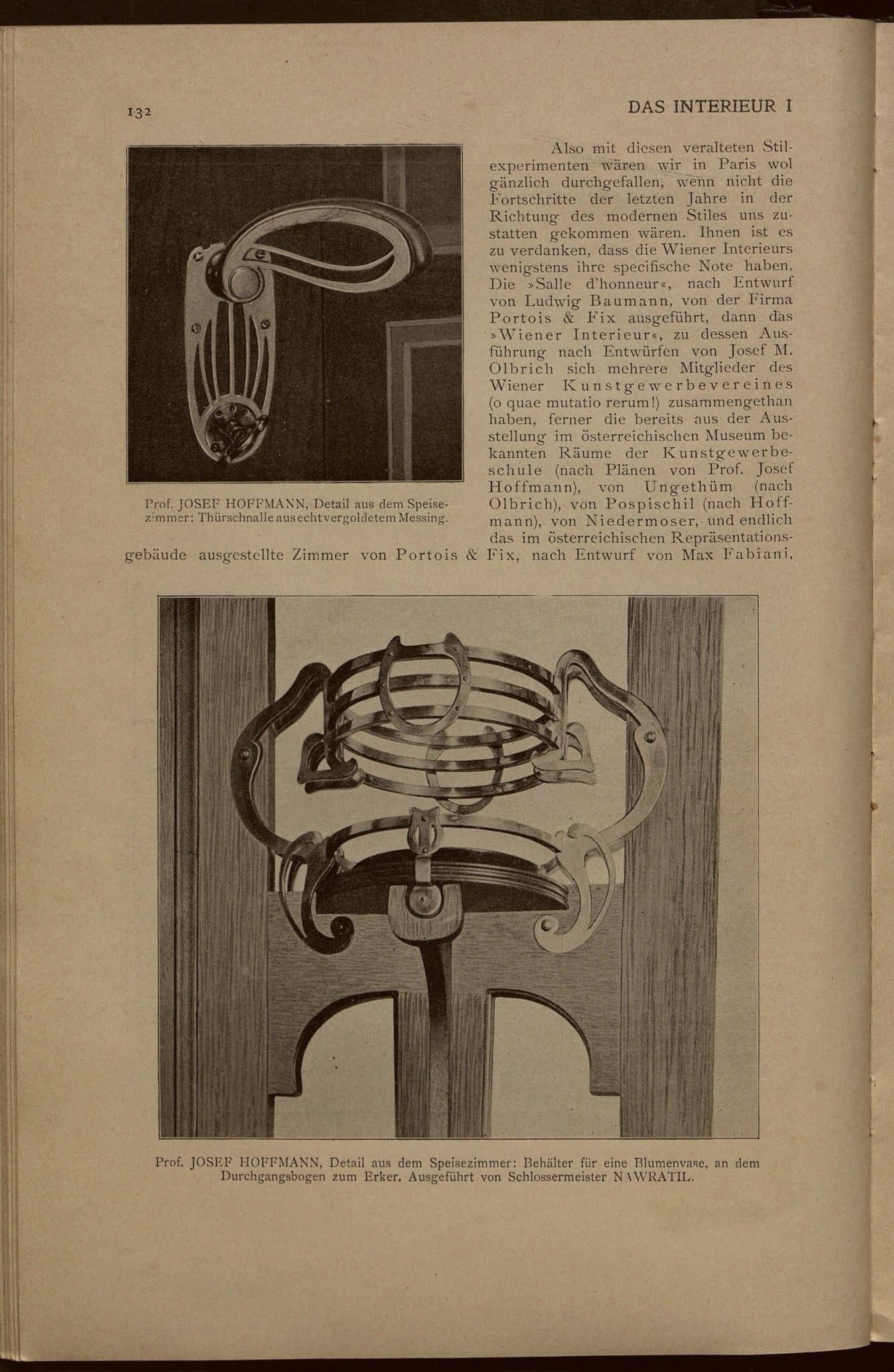
    bib.: E. Ploil, H. Ricke e.a. (ed.), „Loetz – Böhmisches Glas 1880-1940“, vol. II, Musterschnitte, Munich 1989, paper pattern 85/3832, S. 283; comp. illustration of a container for a flower vase, designed by Josef Hoffmann, executed by Nawratil [probably Navratil], in: Das Interieur. Wiener Monatshefte für angewandte Kunst, vol. 1, Vienna 1900, p. 132
    Price on request
    Price on request
    SKU 1566 , Tags ,
    Description

    The clean, geometric design of this nine-light Jugendstil chandelier is a characteristic example of Koloman Moser’s approach to design and already anticipates the formal reduction that would become a defining feature of Viennese Jugendstil. Through its rigorous geometric composition, harmonious proportions, and successful synthesis of functionality and decorative effect, the chandelier embodies the progressive design principles that Moser developed around the turn of the century and that rank among the seminal achievements of Vienna’s artistic reform movement.
    Particular significance lies in the nine glass shades, arranged on two tiers around the circular brass frame. They are based on a design by Koloman Moser documented by a pattern template preserved in the Loetz archives and dated 1901. The shades are executed in the dark blue Phenomen Genre 377 decor, first introduced at the Paris Exposition Universelle of 1900, where it brought the innovative surface techniques of the Johann Loetz Witwe glassworks to international attention. Distinguished by its deliberately irregular, crackled surface, the decor marked a radical departure from earlier decorative finishes and quickly became one of Loetz’s most celebrated and commercially successful creations.
    The chandelier exemplifies the synthesis of functional clarity, exceptional craftsmanship, and refined decorative elegance that characterizes Koloman Moser’s designs and established him as one of the leading figures of Austrian Jugendstil.

    Inquiry

    By submitting the inquiry form, you agree to the use of your data for this inquiry. Privacy Policy

    Chandelier with Loetz shades Koloman Moser Johann Loetz Witwe decor Phenomen Genre 377 ca. 1901 brass glass
    Chandelier with Loetz shades Koloman Moser PG 377 ca. 1901
    You might be interested in

    Thank you for subscribing to our newsletter

    Social Media

    Thank you for your inquiry!

    We will process your request as quickly as possible.

    Current time in Vienna:
    Tuesday, 18:54
    Office hours

    Monday to Friday: 10:00 a.m. – 6:00 p.m.
    Saturday: 10:00 a.m. – 4:00 p.m.

    Visit our exhibitions too

    Social Media

    Always up to date with our art trade newsletter

    Our next exhibitions

    Social Media